Books and book chapters
Forthcoming, Shanbaum, P. and Walker, K., eds., Artificial Aesthetics: Artificial Intelligence in Fine Art and Visual Culture, Routledge.
2026, Walker, K., "AI as participant observer", chapter in Handbook on Anthropology and Artificial Intelligence, Udupa, S., Baas, M. and Hervik, P., eds., Edward Elgar Press.
2026, Walker, K., "AI as theatre", chapter in Moruzzi, C. and Tigre Moura, F., eds., Artificial Intelligence in Creative Industries, Routledge.
2026, Walker, K., "The time machine stops", chapter in Majaca, A. and Pfeiffer, L., eds., Incomputable Earth: Technology and the Anthropocene, Bloomsbury Academic.
2019, Uribe Forés, M. and Walker, K., "The relational surface" in Harriss, H., Brooker, G. and Walker, K., eds., Interior Futures book series, Crucible Press.
2013, Walker, K. and Craft, B., "Data, representation and aesthetics", In Zhou, C., ed., Information in Style. Beijing: ADPP.
2013, Walker, K., "Designing for museum learning", in Luckin, R., ed., Handbook of Design in Educational Technology, Routledge.
2012, Walker, K., Hackers & Slackers: The New York New Media Underground in the Early 1990's, ADP CreateSpace.
2011, Froes, I. and Walker, K., "The art of play: Exploring the roles of technology and social play in museums" In Beale, K., ed., Museums At Play: Games, Interaction and Learning, Museums Etc.
2008, Tallon, L. and Walker, K., eds., Digital Technologies and the Museum Experience, Alta Mira Press.
Journal articles
Forthcoming, Walker, K. and Shanbaum, P., "Not artificial, not intelligent: A critical perspective on AI", Cambridge Journal of Law, Politics and Art.
2026, Walker, K. and Schmid, H., "From artificial temporalities to temporal wisdom", Leonardo 57(5).
2022, Walker, K., "A topian artistic methodology,", Journal of Artistic Research 28.
2021, Schmid, H. and Walker, K., "The atemporal event", Journal of Artistic Research 25.
2021, Walker, K., "Turtles all the way down: Review of the Daata Art Fair", European Journal of Media Studies.
2021, Schmid, H. and Walker, K., "Anti-clockwise: Building a uchronian critical mass", Art & the Public Sphere 9 (1+2): 39-61.
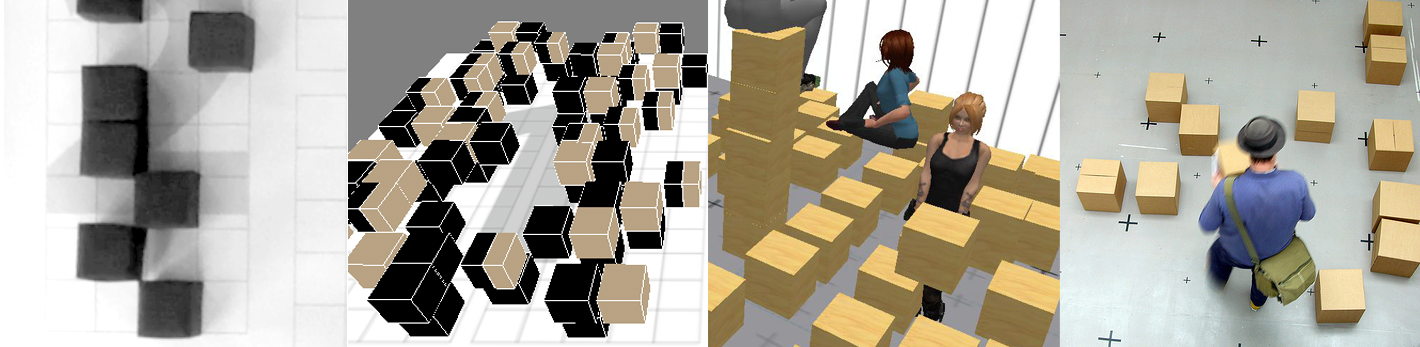
2015, Von Ompteda, K. and Walker, K., "Translating the Quantum World to Human Scale", IEEE Computer Graphics and Applications May/June 2015, pp.6-13.
2003, Walker, K., "Interactive and informative art", IEEE Multimedia Jan-Mar 2003, 4-10.
2002, Walker, K., "Beware Geeks Bearing Gifts", Curator, the Museum Journal 45(1).
2001, Walker, K., "The Museum as 'Information Architecture'", Spectra, the Journal of the Museum Computer Network.
Conference publications
2025, Walker, K. and Papadopoulos, D., “"AI as spatial practice”, Living Better Together: SPACEX conference,
Coventry, UK, 13-14 Nov 2025.
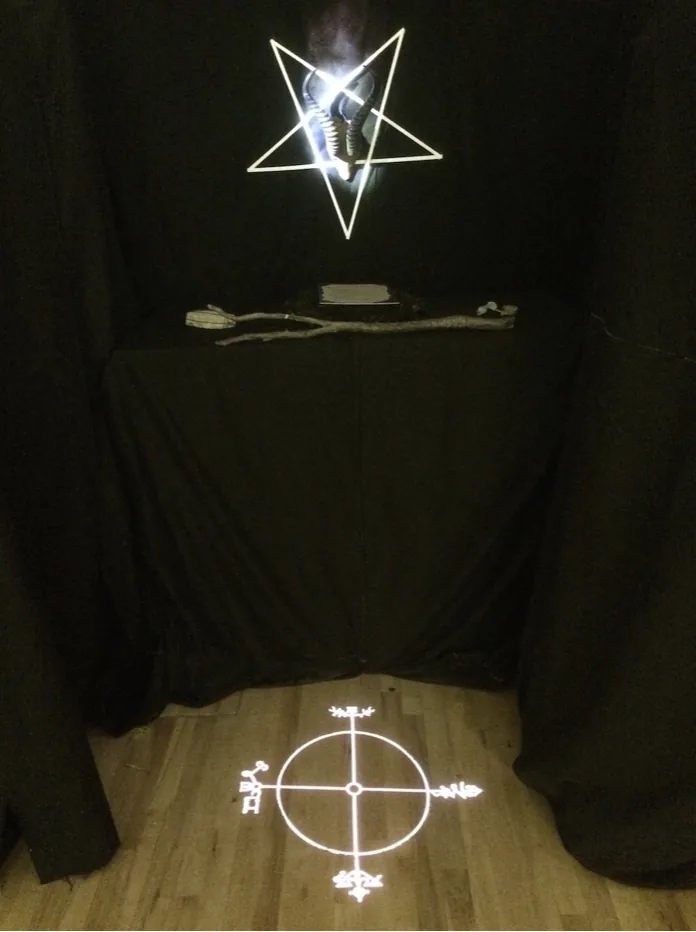
2023, Walker, K and Drupka, A., "Investigating AI as ritual through an experiential installation", Royal Anthropological Institute Anthropology in a Speculative Mode conference, Apr 2023, London.
2023, Walker, K. and Schmid, H., "Beyond runtime: Towards a postdigital temporality", Reanimating Human-Machine Interaction, University of Antwerp.
2023, Walker, K., "Twelve Countries and Nine Earths: A visual ethnography", Royal Anthropological Institute Film Festival conference, Mar 2023.
2022, Walker, K., "Pervasive AI as ethnographer", Anthropology, AI and the Future of Human Society conference, Royal Anthropological Society, June 2022.
2019, Walker, K., "A conversational framework for machine learning", Human-Centered Machine Learning Perspectives Workshop, In CHI '19 Extended Abstracts on Human Factors in Computing Systems (CHI 2019).
2019, Zheng, C.Y. and Walker, K., “Soft grippers not only grasp fruits: From affective to psychotropic Human-Robot Interaction” Gemeinboeck, P., Saunders, R. and Jochum, E. (Eds.) Proceedings of the AI and Simulated Behaviour symposium, Movement That Shapes Behaviour.
2018, Walker, K., "A systems approach to design innovation", Cumulus Conference, 11-14 Apr 2018, Paris.
2018, Yamada-Rice, D. and Walker, K., “Using information experience design and multimodality to make sense of experiences in physical and virtual curated spaces”, 9th International Conference on Multimodality, Univ of So. Denmark, Aug 2018, Odense, DK.
2018, Walker, K., "Investigative design: Materiality, systems, critique" Beyond Change: SDN Design Research Summit, Mar 2018, Basel.
2016, Ferrarello, L. and Walker, K., "The form of sound through hybrid materials", Proceedings of SIGGRAPH, Jul 2016, Los Angeles.
2016, Walker, K., “Resonance research: Sonic reverence, social relevance”, Resonate, Belgrade, 15 April 2016.
2016, Walker, K., Smith, O. and Tacchini, F., "Sonic presence and spectral technology", The Power of Presence workshop, International Society for Presence Research conference, June 2016, Kyoto.
2016, Fass, J. and Walker, K. "De-computing the Pigeon Sensorium", ACM Animal-Computer Interaction conference, Milton Keynes, UK.
2015, Walker, K. and Fass, J., "De-Computation: Programming the world through design", NORDES, June 2015, Stockholm, SE.
2014, Walker, K. and Claisse, C., "Big Dada: From Visualisation to Experience", In Jansen, Y. et al, Death of the Desktop workshop at IEEE VIS, Nov 2014, Paris.
2014, Walker, K. and von Ompteda, K., "PhysicSpace: From Quantum to Human Scale", IEEE VIS Arts Program, Nov 2014, Paris.
2013, Fass, J. and Walker, K., "Robotic displays based on de-computation", Proceedings of the SIGCHI
conference on Human factors in computing systems, Paris.
2013, Walker, K. and Liang, W., "The museum of forking paths", Imagination & the Illustration of Knowledge, Oxford, 7-8 Nov 2013.
Ranner, V. And Walker, K., "Scientific illustration v. the Quantified Self", Imagination & the Illustration of Knowledge, Oxford, 7-8 Nov 2013.
2013, Walker, K., Hogg, S., di Duca, D. and Palmer, O., "Mechanics of Wonder: Scripting visitor experiences with technology", NODEM Design & Digital Heritage Conference, Dec 2013, Stockholm.
2013, Walker, K., Main, A, and Fass, J., "User-Generated Trails in Third Places", HCI-3P Workshop on Human Computer Interaction for Third Places at CHI 13.
2012, Walker, K., Applin, S. and Fischer, M., "Visualising PolySocial Reality", 1st Intl Workshop on Just-in-Time Sociology, Lausanne, CH, Dec 2012.
2010, Rowland, D., Porter, D., Gibson, M., Walker, K., et al., "Sequential art for science and CHI", CHI ’10 Extended Abstracts on Human Factors in Computing Systems.
2009, Kabashi, A.H., Walker, K., Underwood, J., Wirastuti, D. and Elmirghani, J.M.H., "Wireless Sensing for Development: An Integrated Design Approach", 3rd IEEE International Conference on Next Generation Mobile Applications, Services and Technologies, 479-486.
2009, Reynolds, R., Speight, C. and Walker, K., "Bridging formal and informal learning using mobile digital museum trails", 3rd WLE Mobile Learning Symposium, 27 Mar 2009, London.
2008, Walker, K., "Mobile audio capture in a learning ecology", 10th Intl. Conf. on HCI for Mobile Devices and Services, Amsterdam, 2-5 Sept 2008.
2008, Walker, K., Kabashi, A. J. et al, "Interaction design for rural agricultural sensor networks", Intl Congress on Environmental Modelling and Software, Barcelona, ES, 6-10 Jul 2008.
2008, Walker, K., J. Underwood, et al, "A resource kit for participatory socio-technical design in rural Kenya", Proceedings of the SIGCHI conference on Human factors in computing systems, Florence, IT, 5-10 Apr 2008.
2008, Winters, N., Walker, K. and Underwood, J., "Fluid design and community development", Proceedings of CHI Workshop HCI for Community and International Development.
2008, Wirastuti, N.D., Luckin, R., Sheriff, R.E., Walker, K., Underwood, J. and Dunckley, L., "Development of a knowledge management system integrated with local communication channels and knowledge management initiatives for Kenyan rural farming communities", Fifth IEEE international conference on wireless, mobile, and ubiquitous technology in education, 135-142.
2008, Wyeth, P., Smith, H., Ng, K.H., Fitzpatrick, G., Luckin, R., Walker, K., Good, J., Underwood, J.and Benford, S., "Learning through treasure hunting: The role of mobile devices", Proceedings of the International conference on mobile learning.
2007, Walker, K., "Visitor-constructed personalized learning trails", Museums & the Web conference, San Francisco, 11-14 April 2007.
2007, Pierroux, P., Bannon, L., Walker, K., Hall, T., Kaptelinin, V. and Stuedahl, D., "MUSTEL: Framing the design of technology-enhanced learning activities for museum visitors", International Cultural Heritage Informatics Meeting-ICHIM07.
2007, Kayen, R., Steele, W.C., Collins, B. and Walker, K., "Google Earth mapping of damage from the Niigata-Ken-Chuetsu M6. 6 earthquake of 16 July 2007", 6th Conference of the International Conference on Case Histories in Geotechnical Engineering, Arlington, Virginia.
2007, Smith, H., Heldt, S., Fitzpatrick, G., Ng, K.H., Benford, S., Wyeth, P., Walker, K., Underwood, J., Luckin, R. and Good, J., "Reconstructing an informal mobile learning experience with multiple data streams", in Vavoula, GN, Kukulska-Hulme, A. and Pachler, N. (eds), Proceedings of Workshop Research Methods in Informal and Mobile Learning, London, 29-34.
2005, Walker, K. and Winters, N., "Learning with "non-interactive" technology", Technology and Learning Research Symposium.
2005, Winters, N., Walker, K. and Roussos, G., "Facilitating learning in an intelligent environment", IEE International Workshop on Intelligent Environments, 74-79.
2004, Walker, K., "Learning on Location with Cinematic Narratives", SRMC '04: Proceedings of the 1st ACM workshop on Story representation, mechanism and context, pages 55-58, https://doi.org/10.1145/1026633.102664.
2003, Walker, K. "An interactive poster exhibit puts visitors in the picture, in real time", CHI '03 Extended Abstracts on Human Factors in Computing Systems, pp. 640–641, https://doi.org/10.1145/765891.765905.